
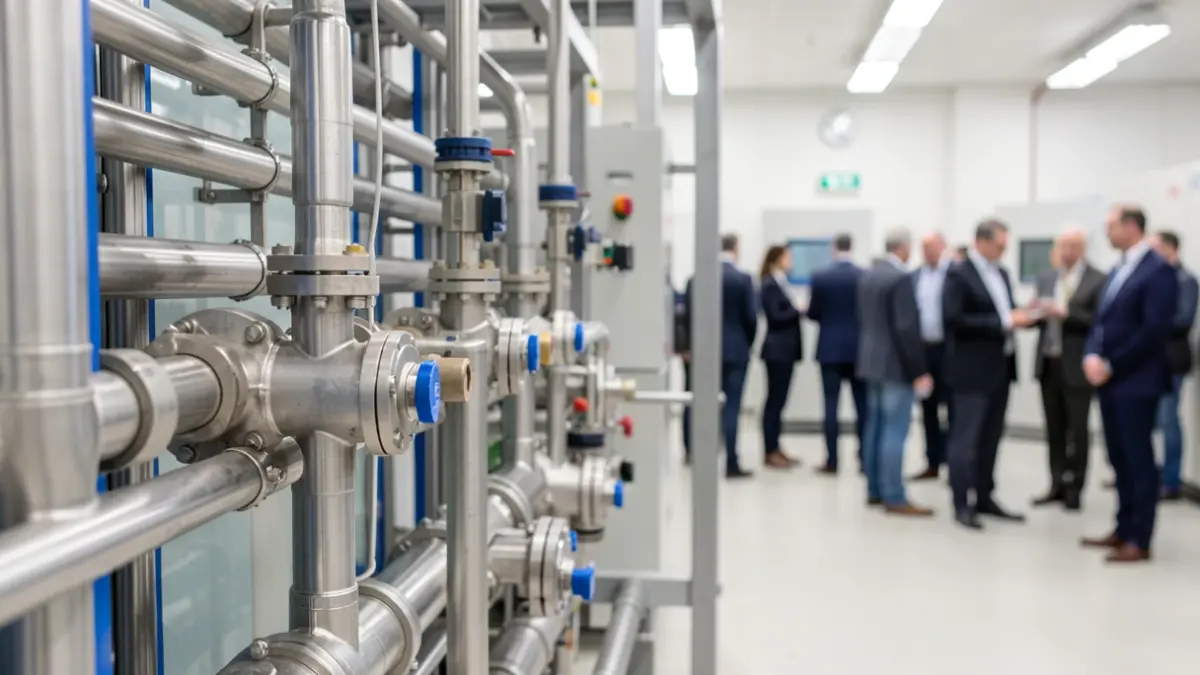
The visit, organized by the Department of the Integral Water Cycle, is part of the students' practical activities program, which also includes other facilities such as the Sagunto desalination plant. During the tour, students were able to observe the water treatment process and the membrane technology used to ensure a safe and quality supply.
The Nules osmosis plant has a treatment capacity of 6,000 cubic meters per day. The system uses membrane filtration and subsequent chlorination to improve the quality of water from local aquifers, particularly reducing nitrate levels originating from agricultural activity.
The delegate councilor for the Integral Water Cycle, Adrián Sorribes, highlighted the importance of opening these facilities to university training. "Our osmosis plant is a fundamental tool to address the presence of nitrates in aquifers and ensure a quality supply for the entire population," he stated.
Sorribes added that the maintenance of these facilities represents "a direct investment in the health, safety, and well-being of our residents." He also emphasized the work of the municipal team and Nules' commitment to a "modern and sustainable" integral water cycle.
The Department of the Integral Water Cycle plans to continue promoting collaborations with the Polytechnic University of Valencia for dissemination and technical training.
The Master's Degree in Chemical Engineering at UPV offers 60 places for the 2026-2027 academic year, focusing on the design and optimization of industrial processes. Nules has also participated in European projects for the sustainable treatment of groundwater.