
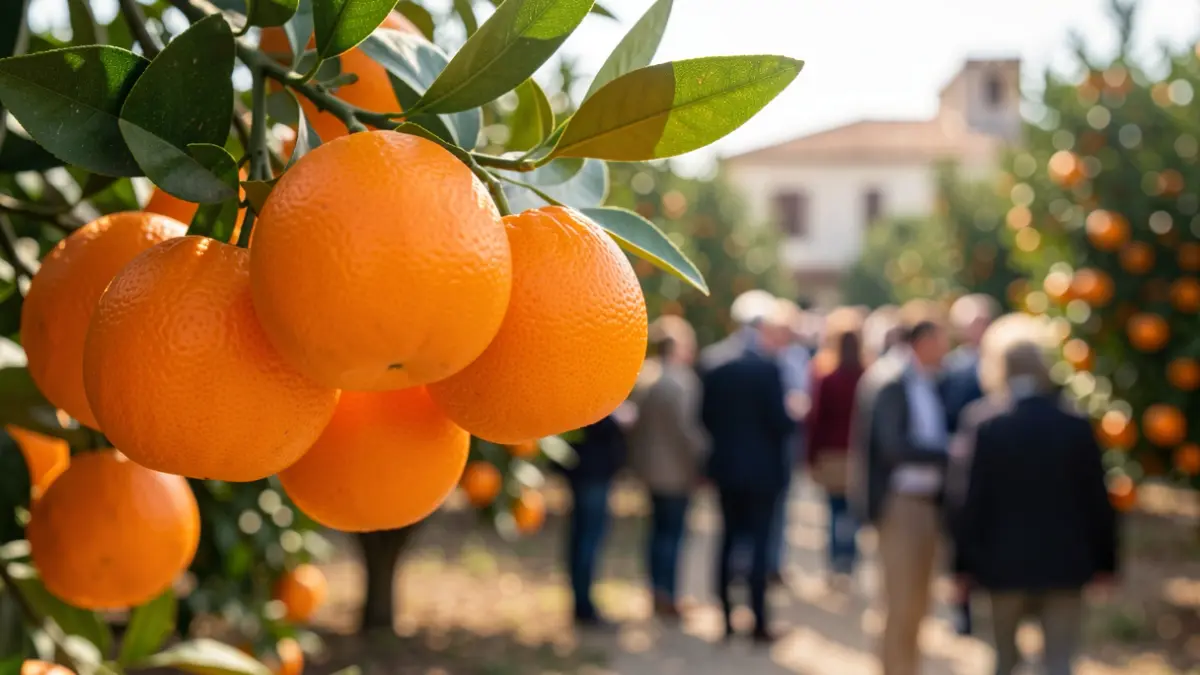
This year's persistent heatwave is significantly impacting citrus cultivation in the Valencian Community. Farmers in the province of Castellón, particularly those in the Millars irrigation system, have had to intensify watering during August. Irrigation days have increased from six to seven per week in an effort to ensure the quality and quantity of the upcoming harvest.
However, the Central Syndicate of Irrigators of Castellón and La Unió Llauradora express concern over a potential low yield in areas like Castellón and Burriana. The primary reason, besides the heat, is the lack of renewal of trees, many of which have surpassed their optimal lifespan of 20 to 25 years.
Climatic conditions have necessitated more intensive water use to counteract the effects of high temperatures. Fortunately, unlike the previous year, reservoirs currently hold sufficient water resources. Rainfall during the 2025-2026 seasons has helped replenish levels, ensuring irrigation for the next campaign. Key reservoirs such as Arenós (55 cubic hectometers, 50% capacity), Sichar (23 cubic hectometers, 48.5%), and María Cristina (6 cubic hectometers, 35.92%) are in optimal condition.
The heat not only increases irrigation needs but also causes physiological stress in the trees. Events like pruning, affected by abrupt temperature changes, can lead to premature fruit drop.
In addition to the aging of the groves, which particularly affects plantations in Castellón and Burriana, other factors contribute to the predicted low production for the 2026-2027 campaign. La Unió Llauradora points to the progressive loss of yield from old trees, unfavorable weather conditions for fruit set, increasing pest pressure from insects like the red spider mite, and the abandonment of plots.
The red spider mite, a pest particularly affecting the clemenules variety (dominant in Castellón), is driving up production costs. The lack of effective control methods, with resistance developing to the usual ovicidal treatments, exacerbates the issue. Citrus production in Castellón for the 2026-2027 campaign is expected to be 553,524 tons, a 2% decrease from the previous year, marking the second-lowest production in two decades.
Climate change is also manifesting in adverse weather phenomena. Approximately 10,000 hectares of citrus in Castellón were affected during the first half of 2026 by rain and wind, representing 40% of the total area impacted in the Valencian Community. Furthermore, the sector has lost 4,978 hectares since 2015, reducing the total area to 32,059 hectares, with a significant decline in mandarin plantations.
The citrus landscape in Castellón faces extreme heat, increased irrigation demands, aging trees, pest infestations, and a continuous loss of cultivated land. Although reservoir levels are favorable for the upcoming campaign, the sector warns that underlying structural problems threaten long-term productive capacity.