
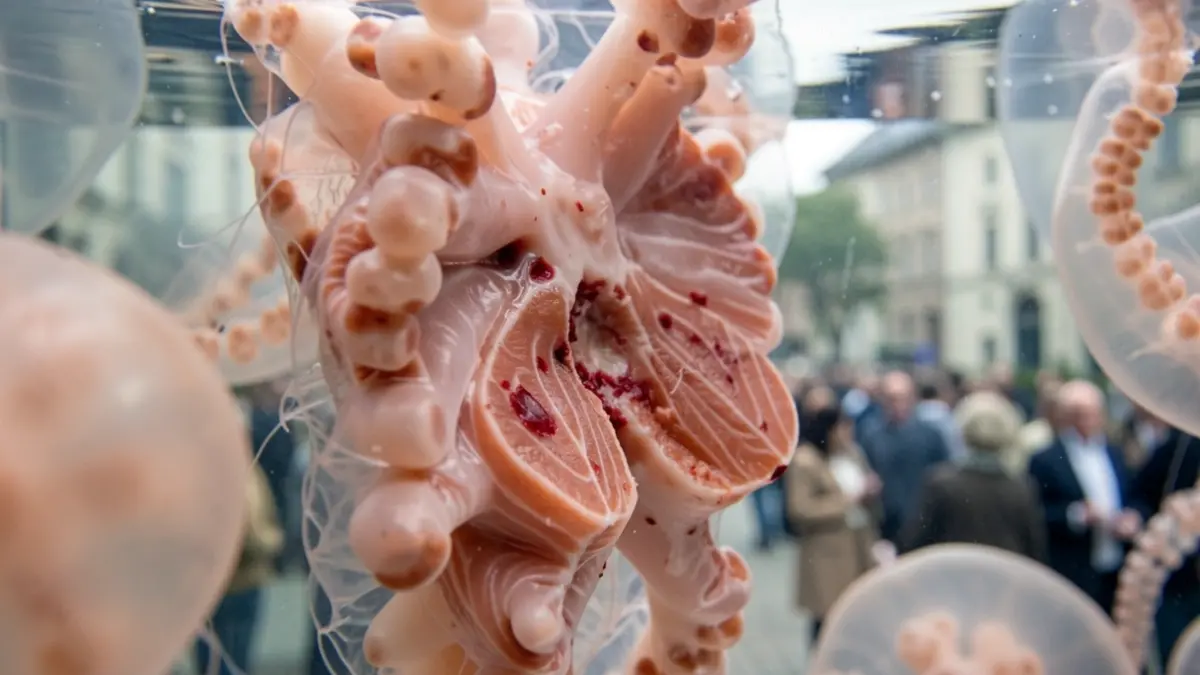
The Institutional Delegation of the CSIC in the Valencian Community, together with the Torre de la Sal Aquaculture Institute (IATS-CSIC), has released a press release about recent research. The work, conducted by the Fish Pathology and Nutrigenomics and Integrative Fish Biology research groups, analyzes the impacts of climate change on Atlantic salmon.
The study, published in the journal Frontiers in Marine Science, focuses on how increasing water temperature and jellyfish exposure affect the health of salmon in aquaculture settings. Researchers have evaluated the modulation of gill microbiota and the transcriptome of Atlantic salmon in response to these climate change-related risk factors.