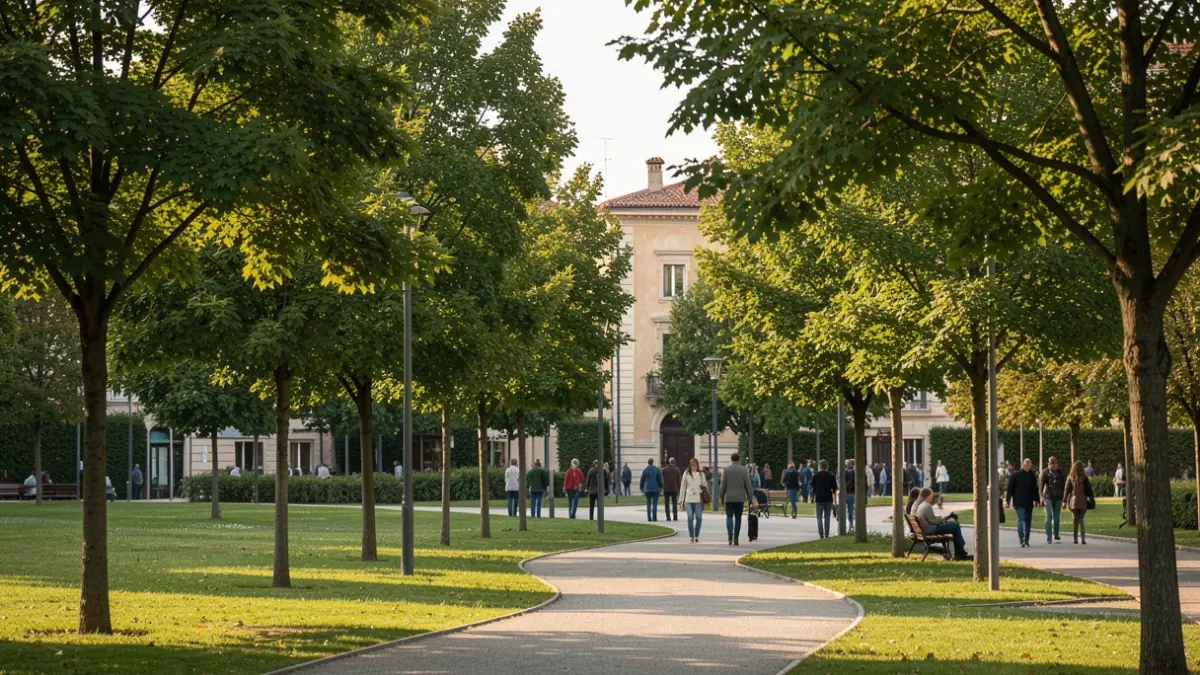
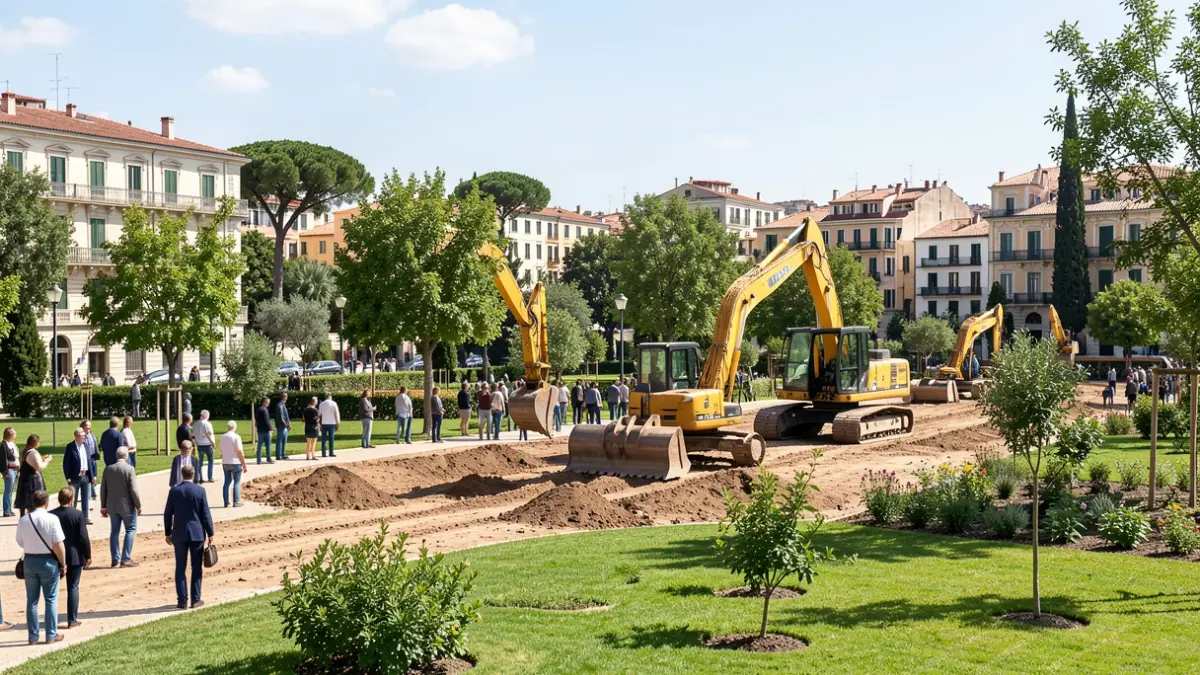
After more than three decades of demands, the Censal Parc project in Castellón is now a tangible reality. Preliminary site preparation tasks, carried out during August, have now given way to the execution of the first construction phase, with machinery operating at full capacity. This ambitious project, which will cover a total of 122,000 square meters, will be developed progressively in three stages.
The Mayor of Castellón, Begoña Carrasco, accompanied by the Councilor for Urbanism and Infrastructure, Sergio Toledo, municipal technicians, and representatives of the awarded company, UTE Durantia Infraestructuras y Vivers Centre Verd, as well as residents from various neighborhood associations, visited the construction site today. Carrasco emphasized that "Censal Parc is now underway" and stated that "many promised it, and this government team has taken the definitive step to make it a reality, moving from plans to actions".
The scale of the park was compared by the mayor to six football fields like Castalia, noting that the first phase, covering nearly 40,000 square meters, is equivalent to two of them. Carrasco expressed gratitude for the involvement of the neighborhood associations, recalling that the park has been "widely demanded for many years by the residents of the area, but conceived as a space for the entire city".
Censal Parc, which will extend towards the Palau de la Festa and Ronda Este, is configured as one of the main urban transformation initiatives. The first phase, with an investment of approximately 7 million euros (6,283,952 euros in contract plus improvements), will reshape land near Camí Almalafa, Carcaixent street, and Fernando el Catòlic street. The project is co-financed by the European Regional Development Fund (ERDF).
Castellón's agricultural tradition will be a distinctive element of the park, reflected in its landscaping and unique features such as a large orange structure housing children's games. The first phase will also include a Mediterranean forest, a children's play area, a biosaludable zone, an adventure park for teenagers with a zip line, a leisure area with pergolas and picnic spots, and a plaza with water features.
The park's design has incorporated proposals from over 7,000 citizens who participated in a public consultation process, ensuring facilities for all ages, from children to seniors, including sports and leisure areas.
The project also includes the relocation of current urban gardens to an area near the Ronda, maintaining this use and allowing progress on the development of land adjacent to Fernando el Catòlic street. Camí Almalafa will be integrated into the park, creating a continuous green space up to the Palau de la Festa. Future phases will incorporate a running track, an auditorium, and more water and leisure areas.