
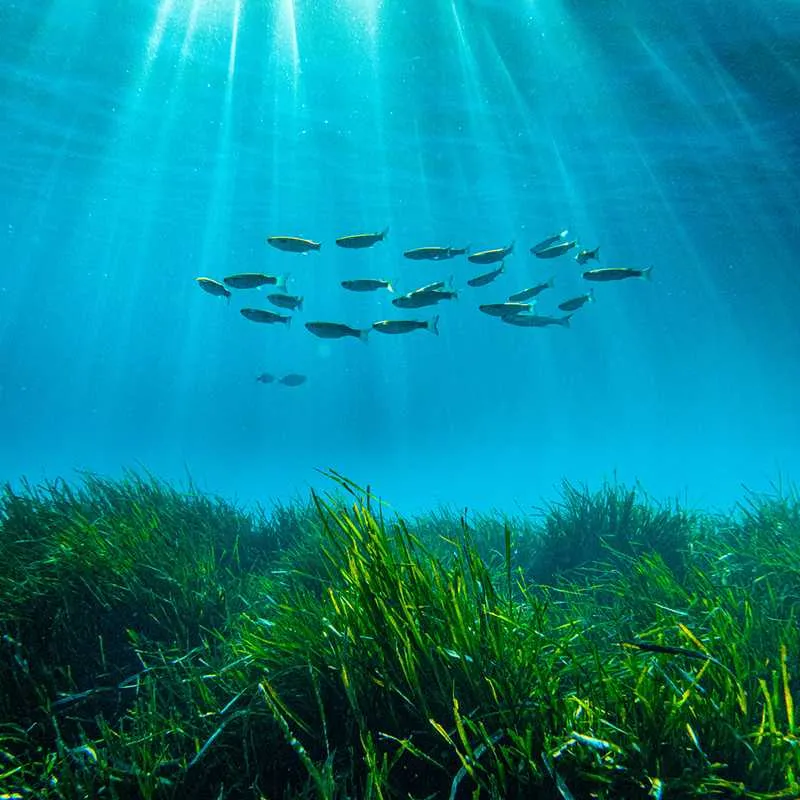
The Punta del Raset area, which last year had an "unfavorable" conservation index (CI) of 0.68, has registered a CI of 0.51 this year, lowering its status to "poor" due to persistent signs of degradation and a high percentage of dead plant matter. In response, the Councilor for Beaches, Pepe Doménech, indicated that they will study "not renewing the installation of a water park in the area when the current concession ends due to the potential impact on the meadow."
The sampling station at Marineta Cassiana has also detected an impoverishment of the meadows, classifying its status as "unfavorable," whereas last year it was "good." However, the remaining stations located along Dénia's coast – succinta/Les Marines (at 5 meters depth), profunda (at 8 meters), Bovetes-Molins, and Punta Negra – show favorable conservation indices, above 0.90. "The data are encouraging, and we hope the situation improves in Punta del Raset and Marineta Cassiana," Doménech added.
The study also confirms that the invasive alga Rugulopteryx okamurae, an Asian species causing severe ecological and socioeconomic impacts on other Spanish coasts, has not been detected at any sampling points.
In parallel, since November 11th, the Dénia House of Culture is hosting an educational exhibition by the Littoral Ecology Institute about Posidonia, coordinated by the Department of Beaches. The exhibition, open until December 11th, poses 12 key questions about this marine plant and its dangers, with explanatory panels and images. The department has offered Dénia's schools the opportunity to visit it to raise awareness about the importance of Posidonia.