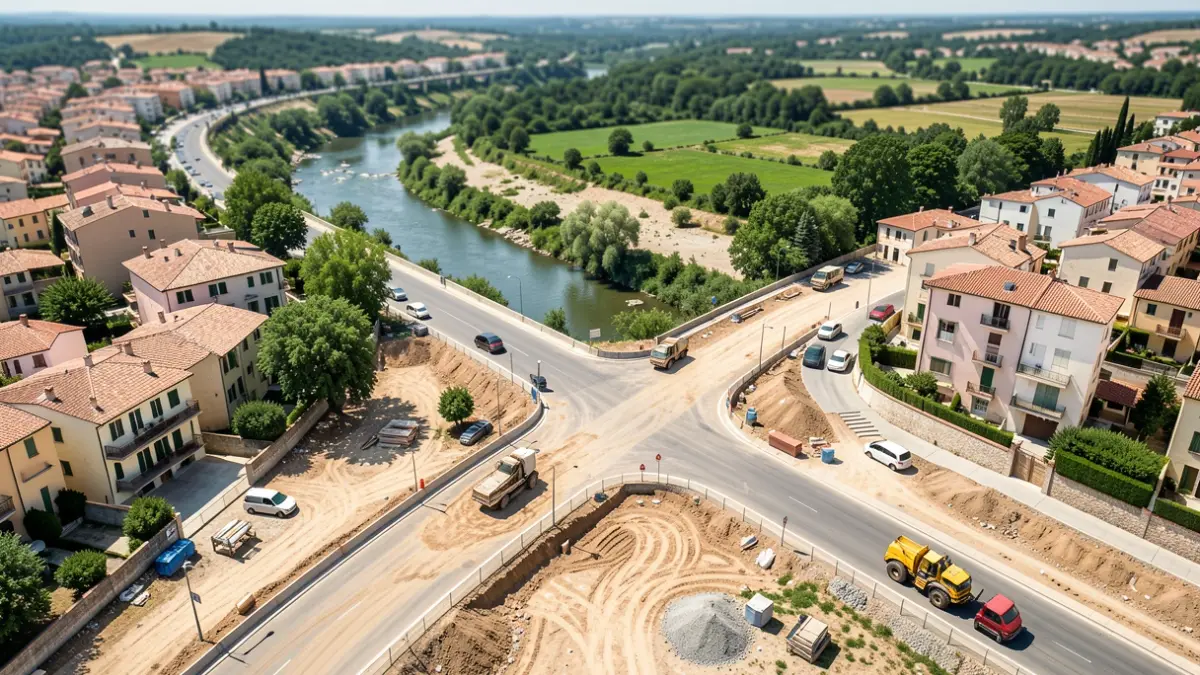
The Third Vice-President of the Consell and Minister of Infrastructure, Vicente Martínez Mus, presented the process today, highlighting it as a further step towards realizing this route that will connect Escultor Navarro Avenue with Pío Baroja Avenue, crossing the new Turia riverbed. The goal is to provide a definitive solution to the municipality's accessibility issues.
During the meeting, also attended by the mayor of Mislata, Carlos Fernández Bielsa, details of the participatory process were discussed. The minister emphasized that current access points are saturated and that the Generalitat is committed to addressing this historical need, pending for over two decades.
The public participation process, part of the Landscape Integration Study's processing, aims to incorporate citizen input on the area's landscape. Martínez Mus stressed the importance of this active listening to find shared solutions, balancing mobility needs with the protection of the Huerta de València, the Turia Natural Park, and other environmental values.
The new development seeks to improve road safety, alleviate internal traffic in Mislata, and reduce noise and air pollution. The minister acknowledged the technical and environmental complexity but defended the importance of moving towards a balanced solution, assuring the Generalitat's commitment to unblocking this strategic infrastructure.
The mayor of Mislata thanked the Generalitat for its support and highlighted the project's consensus, which also has the backing of the València City Council, as it will help reduce overall traffic in the capital, particularly over the Nou d’ Octubre Bridge.