The RITCONTACT project, an initiative by the Universitat de València with the participation of the ARTEC group from IRTIC (Institute of Robotics and Information and Communication Technologies), seeks to answer what the spaces and landscapes were like where Iberian communities developed their ritual practices over two thousand years ago. The combination of archaeology, 3D digitization, and virtual reality allows for a new perspective on these spaces.
The nomination for the National Geographic +Historia Awards recognizes the project's potential to disseminate and contribute to the conservation of historical and cultural heritage through immersive technologies. The verdict will be announced in December.
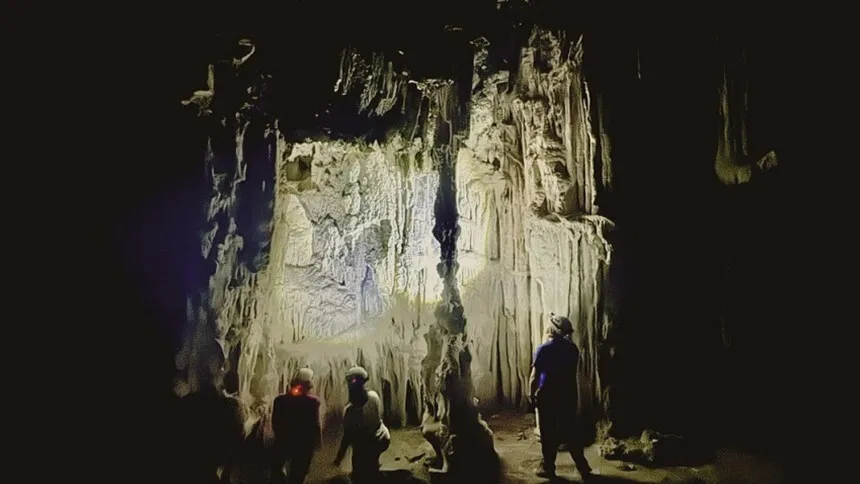
Coordinated by the Department of Prehistory, Archaeology, and Ancient History at the UV, RITCONTACT investigates the symbolic world and ritual practices of the Iberian culture in caves and other natural spaces, focusing particularly on the territories of Kelin and Edeta, in the current province of Valencia. Excavations have documented ceramics, metal objects, and human and animal remains related to these practices.
The ARTEC group from IRTIC develops the virtual recreations, video guides, and narrative resources. The objective is for the public to virtually explore spaces linked to ritual practices from the 5th to the 3rd centuries BCE, based on reconstructions from available archaeological documentation. To achieve high fidelity, high-resolution 3D models generated with LiDAR technology, which precisely records the geometry of the spaces, are used.
The technical challenge of transferring so much information to virtual reality is addressed with dynamic geometry management procedures, which display more detail in areas close to the user and less in those further away, making patrimonial accuracy and immersive fluidity compatible. The caves of Bugarra, Chiva, and Requena are among the investigated sites.
RITCONTACT combines archaeology, bioarchaeology, geoarchaeology, archaeometry, and sensory analysis with geographic information systems and 3D digitization. This interdisciplinary approach allows for the study of landscape configuration, routes, and the physical and sensory characteristics of ritual spaces.
The nomination recognizes a proposal that goes beyond scientific documentation, exploring new ways to communicate archaeological research through visual, interactive, and immersive experiences. Virtual reconstructions allow for an approach to heritage without needing to access the original sites.
The collaboration between humanistic research and advanced digital technologies, such as virtual reality and 3D scanning, exemplifies how technological innovation can contribute to recovering and disseminating knowledge about past societies.