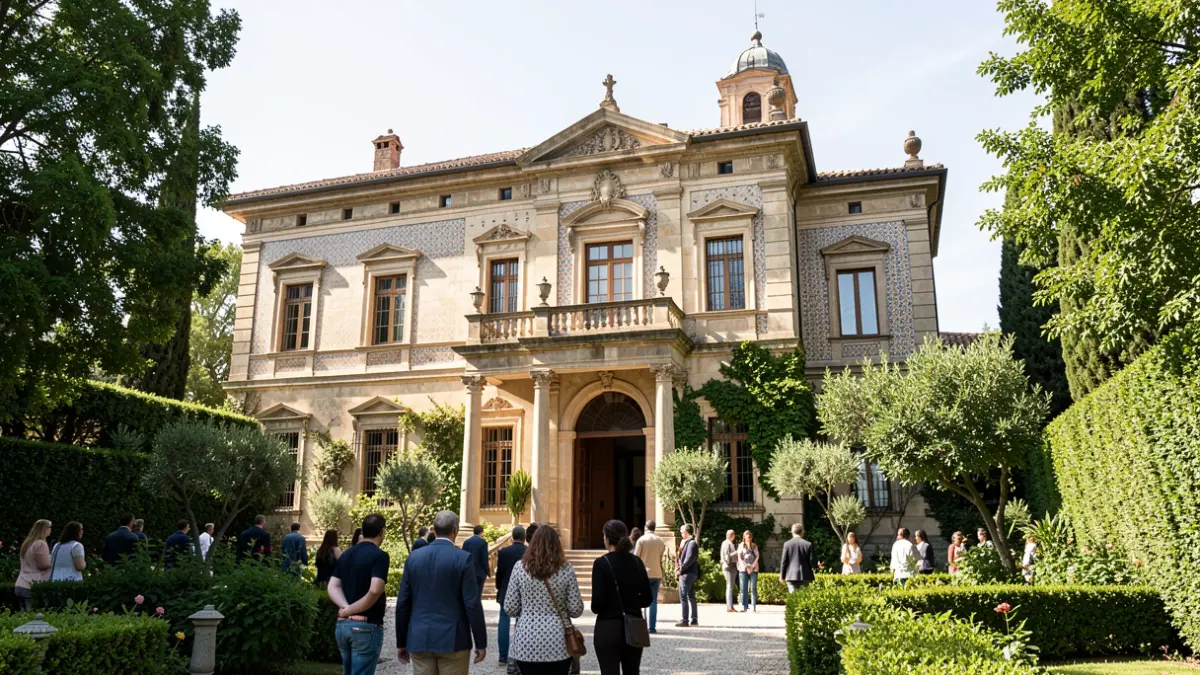
Renovation works at Villa Amparo, located in Rocafort (Valencia), will commence within a month. The Directorate General of Cultural Heritage of the Conselleria of Education, Culture, and Universities has initiated this project to restore the protected property and adapt it for cultural and museum use. The start of the work awaits the approval of the safety plan and the formalization of the commencement act with the awarded company.
Villa Amparo holds special significance in Spanish cultural and literary history, having been the residence of poet Antonio Machado between 1936 and 1938, during the Civil War. From this house, the poet developed part of his intellectual and literary activity, giving the space significant heritage value.
The property is also one of the few chalets of its kind integrated into the traditional historic center of Rocafort. The comprehensive renovation aims to preserve its relevant architectural elements and restore its spatial organization from after the reforms in the 1950s and 1960s, thus reflecting its historical evolution. The house has a built area of 426.85 m² on a plot of 3,303 m², allowing for the creation of exhibition and interpretation spaces.
A significant part of the project focuses on restoring the gardens, recovering the historical configuration between 1926 and 1946. Elements extraneous to the original design will be removed, architectural barriers corrected, and the connection between outdoor spaces improved. An external elevator will be installed on the west facade, connected by a walkway, to ensure universal accessibility.
The project also includes the recovery and expansion of the irrigation system, utilizing water from the Real Acequia de Moncada. The historical vegetation will be maintained, native species incorporated where necessary, and the original fencing restored, creating a green cornice integrated into the orchard landscape.
The future cultural and museum use is a key focus of the project, aiming to preserve the property and facilitate public access. The works will respect the historical character of the house and gardens while enabling cultural activities compatible with its protected status.