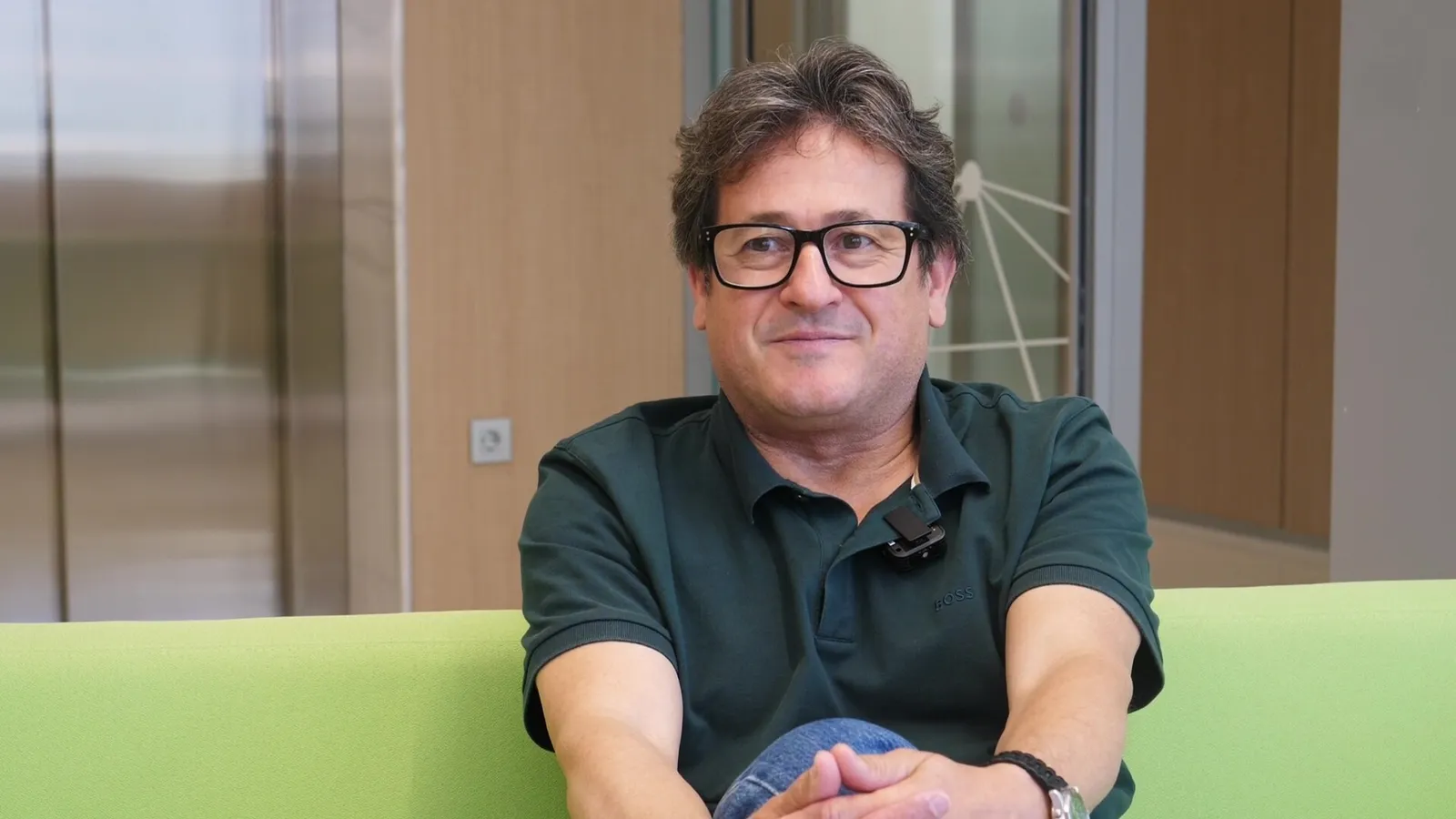
Pérez-Alonso discovered genetics during his Biology studies at the Universitat de València, an event that marked the beginning of a career that has helped place Valencia on the genomic medicine map. His connection with the Universitat de València has been fundamental, serving as the place where he was born as a student, researcher, and scientific entrepreneur.
His research career began with an interest in nature, but he discovered the potential of DNA and genes. Thanks to professors like José Luis Mensua and Rosa de Frutos, he focused his career on molecular genetics. Partial training in Sweden allowed him to learn cutting-edge DNA sequencing techniques, anticipating their use in diagnosis and treatments.
In the 1990s, he participated in international genome sequencing consortia, publishing in journals like Nature. This experience gave him a clear vision of the growing role of companies in DNA sequencing and the molecular diagnostics market, envisioning clinical applications.
The transition from the university laboratory to the healthcare system occurred through collaboration with the Conselleria de Sanitat and the Hospital Universitario La Fe, technically directing an agreement to provide molecular tools for disease diagnosis. This was one of the first real experiences of transferring university knowledge to clinical needs.
The initial barriers were the high cost of genetic sequencing and the slowness of the processes. The need for efficiency led to the incorporation of automatic sequencers and significant technological investments, making evident the need for more agile structures than purely academic ones.
In 1998, he founded Sistemas Genómicos, the first spin-off of the Universitat de València, to meet hospital needs and remain technologically competitive. At that time, entrepreneurship from the university faced cultural barriers, but today it is considered essential for knowledge transfer.
Sistemas Genómicos enabled the development of customized genetic tests for specific patients, particularly for rare diseases, becoming a benchmark in Spain. Later, in 2009, he co-founded the Instituto de Medicina Genómica (now Health in Code) at the Parc Científic UV, leveraging its facilities and institutional support.
The Parc Científic UV has been fundamental in consolidating biotechnology companies, connecting research, technology, talent, and the market. His experience has accelerated the development of projects like Health in Code, now a European and international reference.
The Valencian biotechnology ecosystem has evolved spectacularly, driven by initiatives like the National Congress of Entrepreneurial Scientists, which has helped foster an entrepreneurial culture in science.
The main current challenges are international competition and the speed of change, especially with artificial intelligence, which demands almost immediate action. Genomic medicine has evolved from reading specific genes to reading entire genomes, but there is still much to be done in interpreting this information.
Among his scientific contributions is the discovery of the muscleblind gene, which has led to therapeutic approaches and the creation of ARTHEX Biotech. He also participates in Mendels Brain, which applies genetics to psychiatry for more personalized medicine.
Pérez-Alonso has also promoted outreach and training initiatives to translate scientific knowledge into a useful format for healthcare professionals. He believes that scientific and business leadership requires foresight, the ability to adapt, and the creation of multidisciplinary teams.
The university keeps him connected with new advances, providing immense intellectual satisfaction. What motivates him is being at the forefront of science, translational research, and entrepreneurship, seeking solutions for patients who still lack diagnosis or treatment.
He feels proud of the specific cases of patients for whom they have provided a diagnostic solution and, where possible, paved the way for personalized treatments. His advice to young researchers is not to settle for pure science but to seek ways to exploit and transfer knowledge to reach patients. His desired legacy is the continuation of the National Congress of Entrepreneurial Scientists and contributing to finding a solution for every disease.