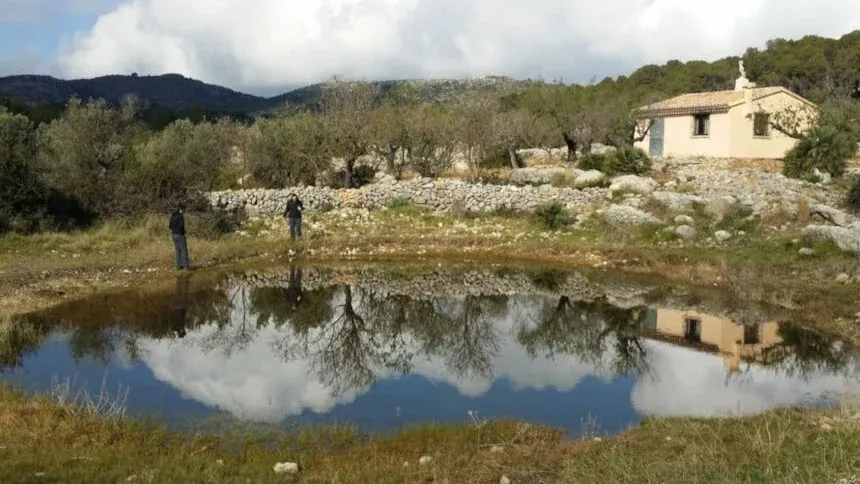
The research, published in the scientific journal Nature Ecology & Evolution, analyzes 206 European ponds and nearly 2,500 biodiversity observations. The results show a positive association between species diversity and the capacity of these ecosystems to simultaneously maintain different ecological functions, a relationship that intensifies in drier regions. Researcher María Antón-Pardo from ICBiBE participated in the study.
The research team examined four major groups of organisms (aquatic plants, zooplankton, macroinvertebrates, and amphibians) and related their diversity to ecological processes such as methane emissions, chlorophyll concentration, aquatic biomass accumulation, organic matter decomposition, and carbon sequestration. Ponds with more diverse biological communities exhibit a greater capacity to perform multiple functions concurrently, a property known as ecological multifunctionality.
Maria Cuenca, a researcher at the Aquatic Ecology Research Group (GEA) at UVic-UCC and lead author of the study, emphasizes the need to conserve both the ponds and the organisms they host. The research underscores that protecting an aquatic ecosystem involves maintaining the diversity of organisms that enables its functioning.
Zooplankton, a collection of small animal organisms suspended in water, plays a crucial role. Greater richness of these organisms is associated with lower methane emissions and facilitates energy transfer in the food web. The study also identifies a negative association between the presence of fish and pond multifunctionality, possibly due to zooplankton predation and sediment disturbance.
The findings are particularly relevant for the Valencian Community and other Mediterranean regions, vulnerable to rising temperatures and changes in precipitation. Ponds, due to their shallow depth, are sensitive to these alterations. Sandra Brucet, a researcher at UVic-UCC, warns that Mediterranean ponds can be susceptible to biodiversity losses that affect their overall functions.
In addition to drought, the study alerts to the effects of eutrophication, associated with excess nutrients (nitrogen and phosphorus), often linked to intensive agricultural practices. Nutrient excess is linked to reduced ecological multifunctionality. Therefore, the research team proposes a dual priority: conserving pond biodiversity and reducing excessive nutrient inputs.
The research, with participation from ICBiBE, provides scientific evidence to guide conservation strategies for these habitats, which are often overlooked in environmental policies despite their importance.