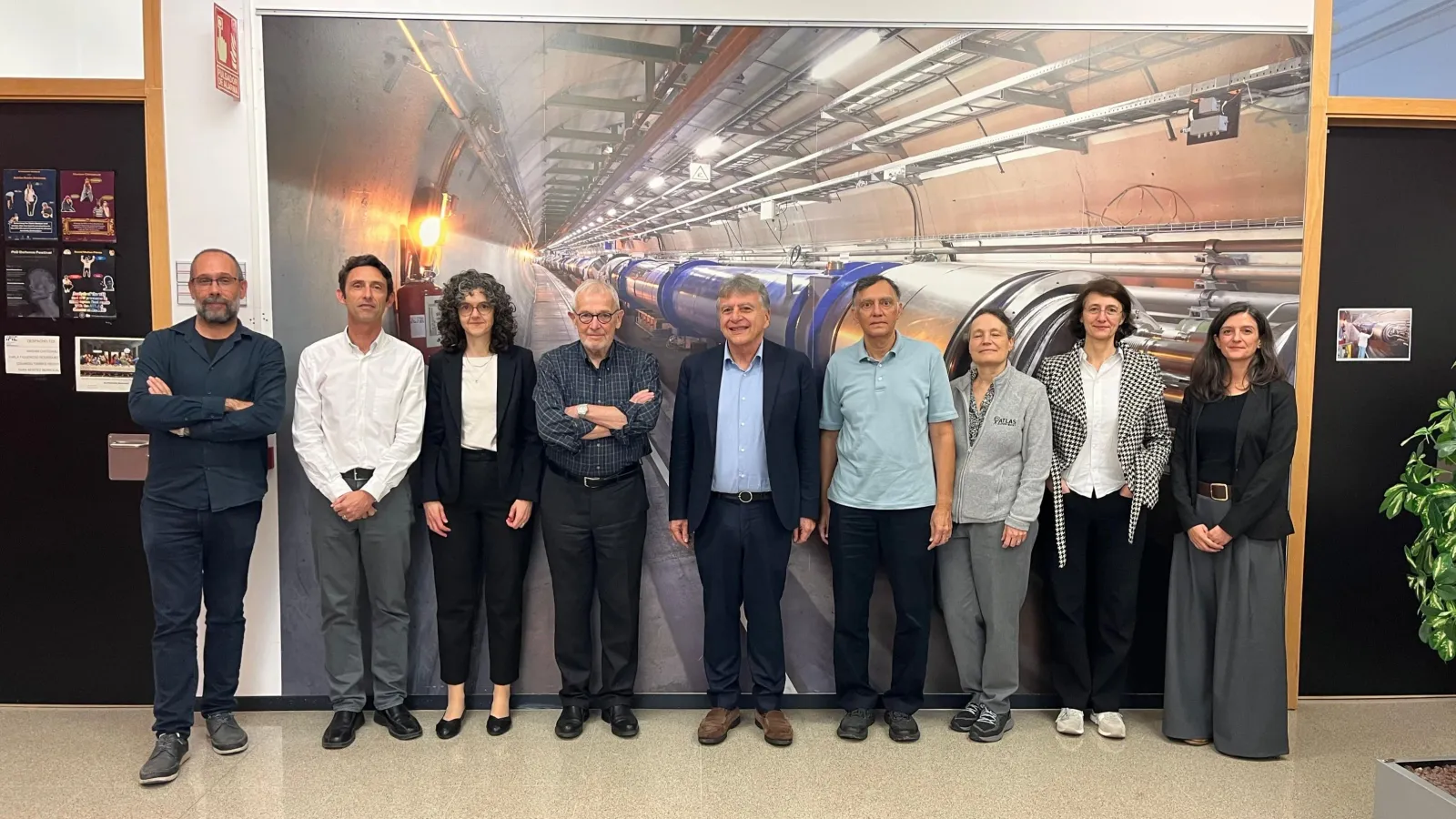
The talk, organized by the Faculty of Physics and the IFIC, took place in the Marie Curie Auditorium and received over 200 attendance requests, necessitating a move to the Science Park due to high demand.
Halzen, a pioneer in neutrino detection, used his train journey from Barcelona to test the lecture he will deliver in December for his Nobel Prize. With warmth and humor, he invited attendees to provide feedback on this initial version before reviewing decades of research on these elusive particles.
Neutrinos, popularly known as 'ghost particles,' are key to studying high-energy cosmic phenomena. They traverse the universe with minimal interaction, offering a window into the invisible that light or other radiation cannot access.
A central focus was IceCube, the Antarctic observatory that uses a cubic kilometer of ice to detect neutrinos. Halzen recalled the project's technical challenges, which began with rudimentary prototypes, and emphasized the importance of international collaboration and new generations of researchers.
The lecture featured Juan de Dios Zornoza, a professor at the UV and researcher at the IFIC, who highlighted his scientific relationship with Halzen and the ongoing research in the KM3NeT project in the Mediterranean.
Students posed questions about dark matter, sterile neutrinos, and the future of IceCube, as well as Halzen's scientific vocation. He revealed that his youthful dream was to be a professional cyclist, illustrating how science progresses through curiosity, perseverance, and collaboration.