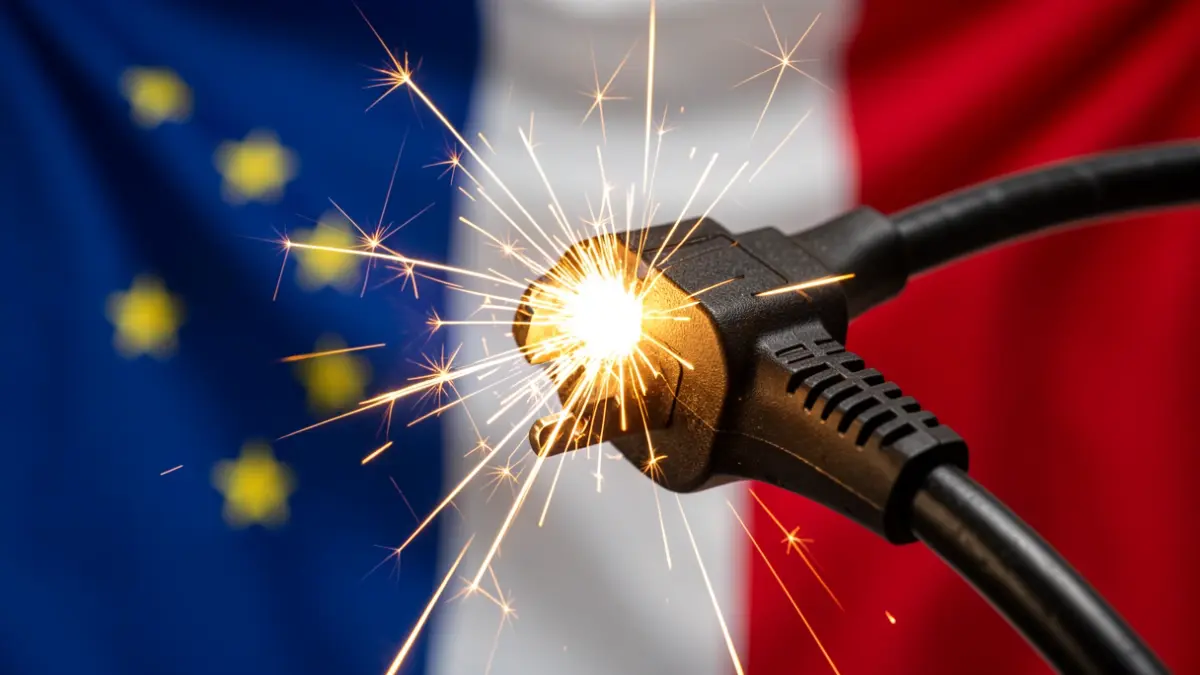
Red Eléctrica believes that France's "traditional reticence" to accelerate the construction of new power lines across the Pyrenees is the reason Spain remains an 'energy island,' a situation that violates the European Union's plans for electrical integration among member states.
Beatriz Corredor, president of Redeia (the parent company of Red Eléctrica), denounced this situation during a breakfast forum organized by Nueva Economía Fórum. Corredor took the opportunity to joke about the Spanish national team's victory against France in the football World Cup: "We scored a goal for every interconnection they don't want to build."
The current connection between Spain and France only allows for the transport of the equivalent of 2.8% of Spain's electrical power (around 3,000 MW), falling short of the EU's target of 10% for 2020 and 15% for 2030. Corredor warned that even with current projects, Spain will remain below Brussels' requirements.
A new connection across the Bay of Biscay is underway, which will increase interconnection capacity to 5,000 MW by approximately 2030, reaching 5% of the total. However, France has excluded the other two planned projects through the Pyrenees (Aragón-Marsillon and Navarra-Las Landas) from its network development plan, which would have increased bilateral capacity to 8%.
Corredor indicated that Spain "will consider other international interconnections" if France continues to impose obstacles. The Spanish government has already signed a memorandum of understanding with Ireland to study a future electrical interconnection between the two countries. Despite its modest connection with Europe, Spain has been a net exporter of electricity for five years, serving as a "great renewable battery in the EU."