
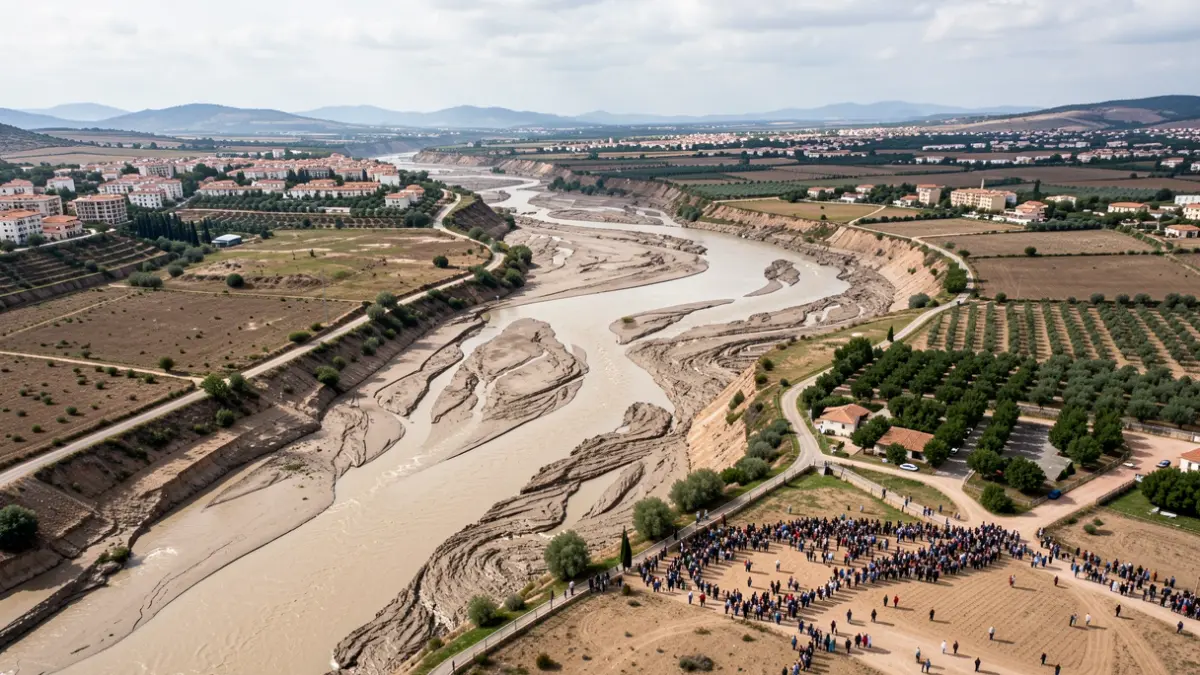
The reconstruction of the event, based on precipitation data and mathematical models, reveals how water carried sediment and how urban occupation of flood-prone areas worsened the incident. The study, published in the journal Journal of Hydrology: Regional Studies, offers lessons for enhancing prevention against Mediterranean flash floods.
One of the main conclusions is that the flood cannot be explained solely by the flow of the Poyo barranco. Most analyzed barrancos reached their peaks between 6:30 PM and 7:50 PM, causing large volumes of water from different channels to converge in a very short period, exacerbating the situation. "The coincidence of significant water and sediment contributions in a very short interval was decisive," states Carles Beneyto, lead author of the study.
Simulations estimate the system's combined contribution at around 7,000 cubic meters per second before the main overflows. Furthermore, morning rains had already saturated the basins, leading to a faster and more intense response to the extraordinary afternoon precipitation.
Sediments accounted for approximately 7% of the total volume of the flood surge, reaching about 19% during peak flow moments. These materials increased flow resistance and reduced the channels' evacuation capacity, worsening the flood's effects. Additionally, the occupation of floodplains and infrastructure influenced water paths.
The researchers used the TETIS hydrological model and high-resolution hydraulic simulations. The UPV team warns that episodes of this complexity cannot be assessed solely through statistical flow estimates at specific points. "We must jointly evaluate rainfall, basin response, sediment transport, and land occupation. Integrating these processes is fundamental for improving risk assessment and territorial planning for extreme flood prevention in the Mediterranean," concludes Félix Francés, Professor of Hydraulic Engineering.