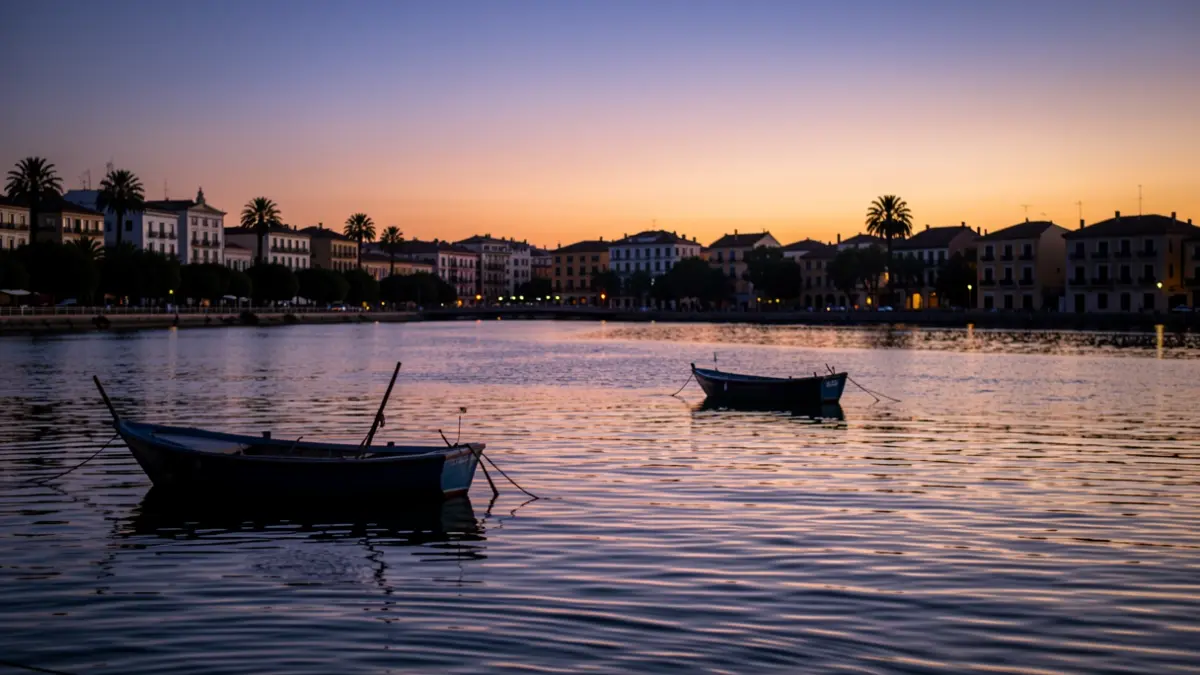
The experience of witnessing a total solar eclipse from a location like Valencia's L'Albufera was described as a privilege by many attendees. The natural beauty of the surroundings was enhanced by the unusual darkness caused by the moon passing between the sun and the earth.
Access to the observation point presented significant challenges. Traffic restrictions imposed to prevent crowds and protect the Devesa del Saler forest led to the closure of the CV-500 road, limiting access to residents and those who opted for alternative means such as bicycles, the line 25 bus, or long walks.
The Guardia Civil controlled access from early morning to manage traffic pressure and prevent vehicles from entering key wooded areas. Due to parking difficulties, many left their cars miles away, as was the case for Adán Sánchez, a young man from Toledo living in Catarroja, who walked from El Palmar cemetery to arrive with his camera.
Visitors from various origins, including Italians, Germans, and French, endured the extreme heat, many armed with umbrellas and sun protection, turning the heat-related health emergency into a real threat. Public transport became a great ally, with many people using line 25 from the center of Valencia.
Nicole Medina, a public transport user, noted that although the bus was very full, most passengers got off earlier, leaving her as the sole user at the pier stop. She described the event as a once-in-a-lifetime opportunity.
Attendees, equipped with umbrellas, sunscreen, water, and special glasses, endured the intense sun to secure a prime spot at the Gola de Pujol pier, a well-known location for watching sunsets.
Authorities had advised against traveling to L'Albufera due to anticipated traffic congestion on return routes, predicting a real "traffic trap." Nevertheless, many risked the infernal heat to witness the event.
With public transport operating, arrivals were staggered. Some booked at local restaurants to guarantee parking, while apartment owners came down to watch the phenomenon from dry land.
Before the key moment, many took the opportunity to enjoy nearby beaches, eat at restaurants, or even take a nap while waiting. The largest influx of people occurred around five in the afternoon, crowding to find shade.
Dilia Guzmán, from Colombia, used a handmade pinhole camera made from a shoebox, a safe method she learned in school to observe eclipses without looking directly at the sun.
Reading books like George Orwell's '1984,' science magazines, or astronomy essays, along with card games and picnics, were companions for some of the attendees who waited patiently. Beach coolers helped make the wait more bearable.
Around 7:37 PM, with the first special lenses in place, the pier was full. Boats also took positions on the saltwater lake. The French family who brought a telescope expressed the excitement of experiencing "the eclipse of our lives."
At 8:33 PM, the climax arrived. L'Albufera darkened, eliciting cheers and applause from those present. Leticia Gaudier, from Belgium, described the experience as "the eclipse of our lives," an emotional event for those who chose this beautiful spot in Valencia.