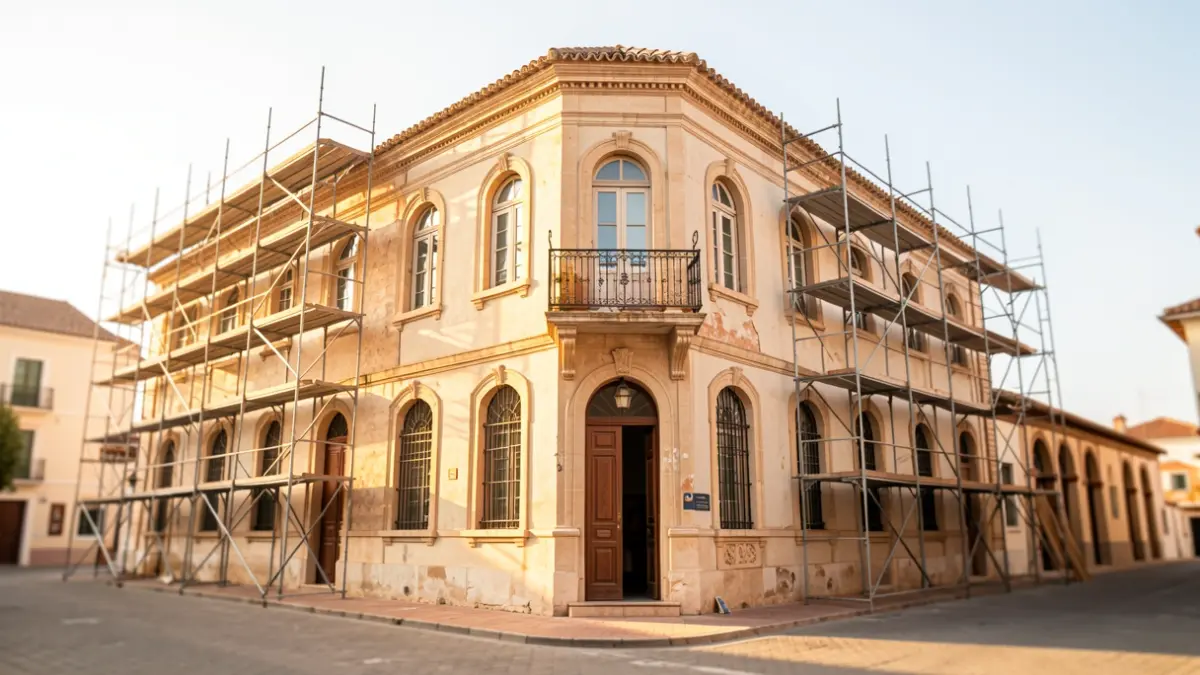
The old industrial building of the tobacco factory, known as the Casa de Misericordia, is undergoing conversion into the International Museum of Cigarreras. This new cultural center, located in the San Antón, Campoamor, and Carolinas neighborhoods of Alicante, aims to revitalize the area and will house collections from renowned artists. Its opening is anticipated for the end of the year, around November, once the adaptation works are completed.
The works, managed by Abala Infraestructuras with a budget of 1,189,200 euros, are scheduled to finish by mid-October. The exact inauguration date will depend on the supply and installation of furniture, as well as the preparation of the first exhibition. Six shows have already been arranged with Light Art Exhibitions until the second half of 2029, costing over 3.7 million euros. These include "Mecenazgo y Coleccionismo en la Casa de Alba," "Modigliani y sus amigos," and "Sorolla a través de la luz."
The Governing Board has also approved a new tender for the museum's furniture, valued at 196,810.96 euros, after the initial bidding process was declared void. This supply must be completed within one month, aligning with the planned timeline for the museum's launch.
The new museum will span a total area of 1,600 square meters, with four exhibition halls covering approximately 780 square meters. The remaining facilities will include a reception, ticket office, shop, cloakroom, children's play area (ludoteca), offices, technical rooms, restrooms, and a cafeteria of about 150 square meters open to the general public, with the possibility of an outdoor terrace.
The cafeteria, which will be the sole hospitality service in the Las Cigarreras complex following the closure of La Cigarra, will be able to host events such as presentations or concerts, according to Culture Councilor Nayma Beldjilali.
The museum visit will commence through the main entrance, leading to the reception and ticket office. Tickets, priced at a general fee of 10 euros (with reduced rates and free admission options), can also be purchased online. There will be free entry hours on Tuesdays and Sundays.
The exhibition halls, adapted to ensure optimal temperature and humidity conditions, include a main gallery of 270 square meters and smaller adjacent rooms. The renovation has preserved the original roof and incorporated security and surveillance measures.
The exhibition circuit also features a children's play area and a shop offering products related to the current exhibitions. Visitors will have access to restored landscaped cloisters, featuring lemon trees and an old well.
The museum's planned opening hours are Tuesday to Saturday from 10:00 AM to 9:30 PM, and Sundays from 10:00 AM to 2:00 PM. It will be closed on Mondays.
The museum occupies about 26% of the 6,000 square meters of the historically rehabilitated building. The remainder of the property will house administrative offices, meeting rooms, an industrial heritage space, multipurpose rooms for artistic activities, a coworking space, training rooms, and a municipal reading room.
A Civil War air-raid shelter, preserved and accessible independently, will also be open to the public. The renovation has facilitated inter-neighborhood connections through an internal corridor, enhancing urban mobility.
The rehabilitation project for the Las Cigarreras complex includes future phases to restore industrial spaces, create new multipurpose areas, parking facilities, and housing for artistic residencies, all aimed at revitalizing the urban environment.