The Torrevieja University Campus hosted the "Desalination, Energy, and Agriculture" conference, organized by the Water Institute of the University of Alicante (IUACA). The event brought together experts and institutional representatives to discuss water resource management.
During the meeting, the importance of the Tajo-Segura water transfer for the agriculture of the Vega Baja was highlighted, and desalination was advocated as a complementary resource. Specialists emphasized the need to combine all available water resources, including surface, groundwater, reclaimed, and desalinated water, to ensure irrigation.
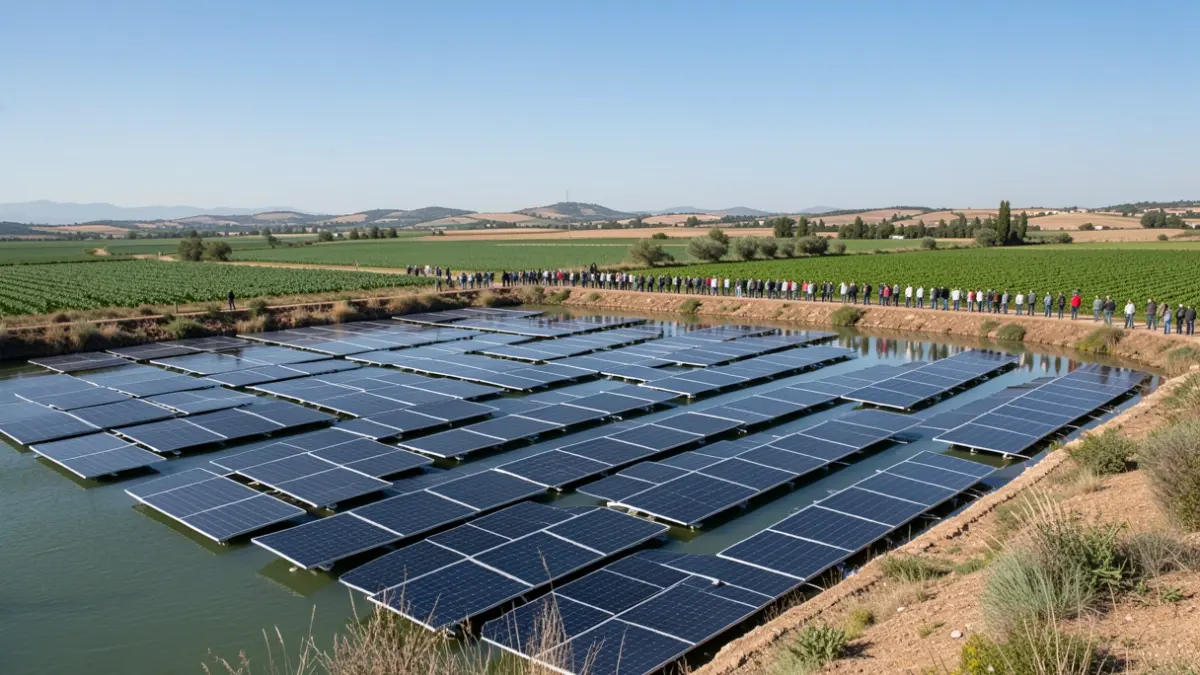
One of the main novelties was the proposal to install a floating photovoltaic park at the La Pedrera reservoir. This initiative, led by researchers Andrés Molina and Pablo Melgarejo, aims to cover part of the energy needs of the Torrevieja desalination plant. The goal is to offer an alternative to installing large solar panel areas on agricultural land, which have raised concerns about their landscape and agricultural impact.
According to the presented calculations, the solar park would occupy less than 10% of the reservoir's surface area, which is approximately 1,300 hectares. The proposal seeks to utilize an existing hydraulic infrastructure without transforming agricultural land of productive and cultural value. It is considered that legal avenues exist to study its feasibility, especially as it is a public installation linked to a general interest hydraulic work.
The conference also addressed the high cost of desalinated water for agriculture. Current subsidies, established by Order TED/157/2023, moderate the price but are temporary. The lack of execution of photovoltaic plants to structurally reduce energy costs highlights the need for long-term solutions. The La Pedrera proposal aims to contribute to reducing energy costs and preserving the agricultural landscape of the Vega Baja.
Research findings were also presented on the characterization of minerals in desalination brines and improvements for the agricultural use of desalinated water, as well as the use of energy communities to incorporate renewable energy into irrigation communities.