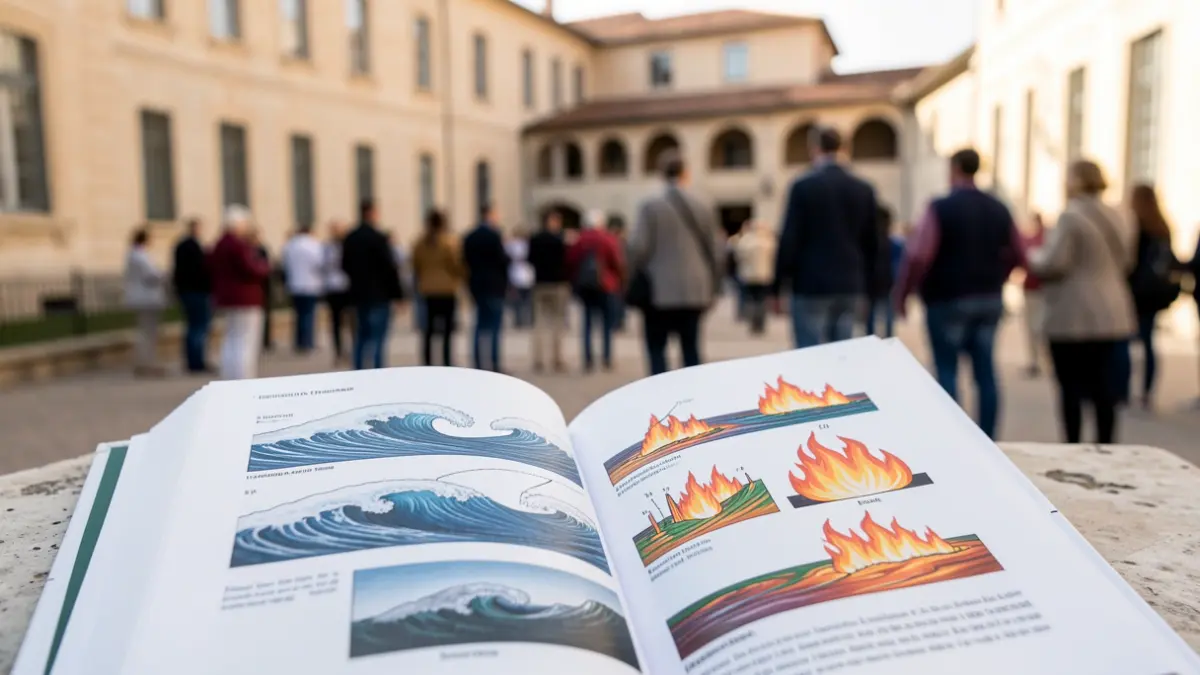
The publication, featuring contributions from over 30 researchers from various countries, offers a multidisciplinary perspective on educating students in areas such as geography, communication, and risk management concerning threats like floods, fires, volcanic eruptions, or earthquakes.
According to Álvaro Morote, a UV professor, "education is the essential piece that must guide all measures designed for disaster risk mitigation," highlighting its importance beyond technological or regulatory advancements.
The analysis not only compiles scientific research but also provides accessible tools for educators and innovative educational experiences. It underscores the need for natural disaster risk literacy at all educational levels, particularly in the context of climate change.
Jorge Olcina, a UA professor, states that "if a human group living with risk does not receive basic education on hazards and the management of extraordinary situations, human life can never be safeguarded." He asserts that even if complete prevention of fatalities is impossible, effective teaching for at-risk populations is crucial to avoid "a dramatic toll of deaths every time a natural hazard occurs."
The compendium offers basic knowledge of major natural hazards and guidelines for teaching them, also considering new information sources like media, the internet, and social networks. Morote and Olcina believe these sources "must play a formative role by preventing the spread of misleading or false messages."
The professors conclude that "a well-educated and informed society will always be a safer society," an idea reinforced by recent events such as the La Palma volcano, earthquakes in Lorca and Granada, forest fires, and the DANA events that have affected the Mediterranean.