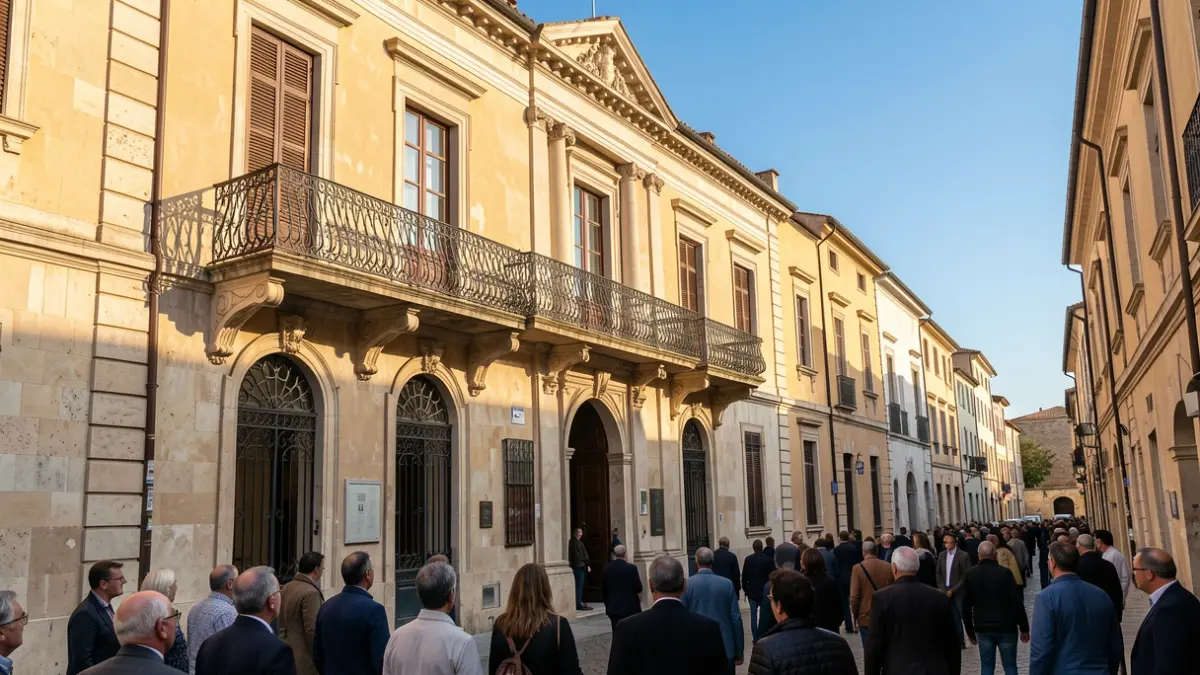
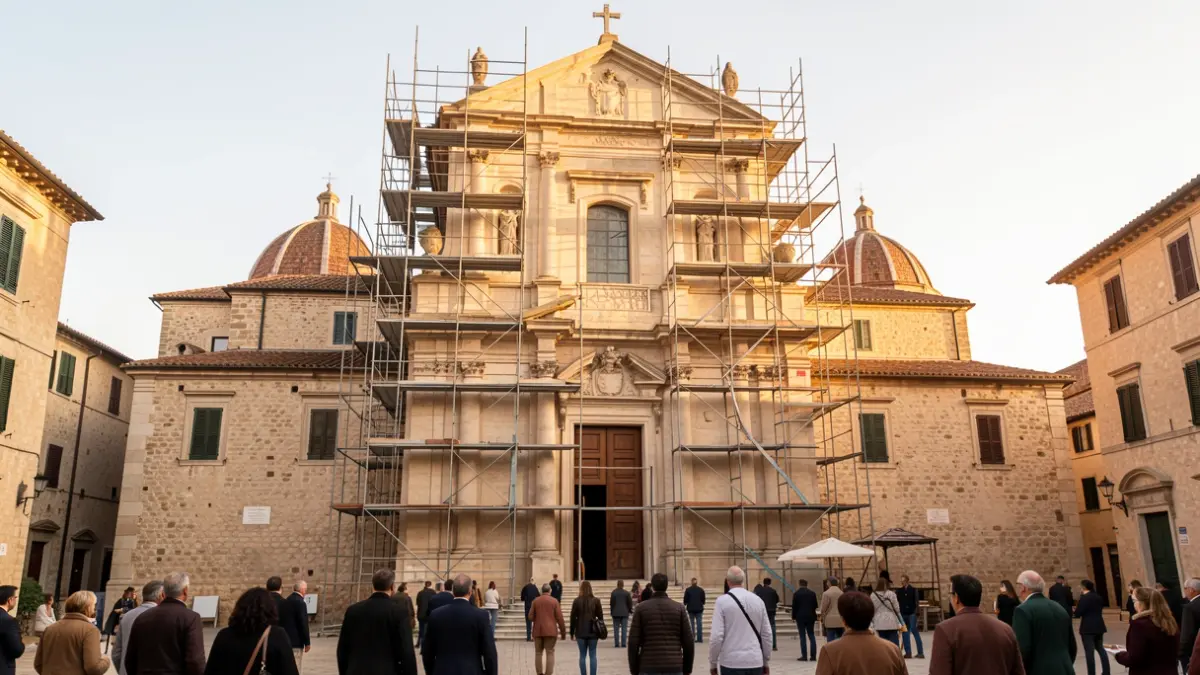
The renovation works for the Plaza del Congreso Eucarístico and surrounding streets in Elche, valued at 2.9 million euros, have begun in 2026. The project, designed by the firm ARN Arquitectos and carried out by Acsa and Bertolín, will last between 9 and 11 months. This initiative aims to improve the aesthetics and accessibility of the historic area, removing architectural barriers and allowing for better views of the Basilica of Santa Maria.
The intervention will be carried out in sections to avoid disrupting the patron saint festivities, particularly the Misteri d’Elx, and the outdoor seating areas, which will be relocated. The giant letters of 'Elche' will be removed, and the fountain in Plaça del Palau will be moved to improve views towards the basilica from Diagonal de Palau and the Palace of Altamira. The mosaics of the Misteri d’Elx in front of Santa Maria's main entrance will also be removed to standardize the seven different paving types in the area. A water feature, mimicking the sky of the Misteri, will be another prominent element. The project includes planting trees to create shaded areas and upgrading the lighting. Additionally, the pedestrian crossing on Diagonal de Palau will be widened, and speed reduction devices will be installed to promote pedestrian traffic across a total area of 5,308 square meters.
Concurrently, progress is being made on the rehabilitation of the Basilica of Santa Maria. Following the development of the Master Plan, the establishment of a foundation to manage fundraising has been initiated. A commission comprising members from the Diocese, technicians, economists, and prominent city businesses is working on its creation, seeking patrons and collaborations with major foundations. Potential subsidies from higher administrations, such as the 2% Cultural program from the Ministry of Culture and Transport, are also anticipated. The Bishop of the Orihuela-Alicante Diocese, José Ignacio Munilla, has indicated that news will be forthcoming.
The foundation, a non-profit canonical entity, will focus on three areas: private funding (companies, foundations), public funding (grants from administrations), and media outreach to raise awareness about the temple's importance. The Master Plan outlines three phases of work, with the first phase alone estimated to cost 3.6 million euros.