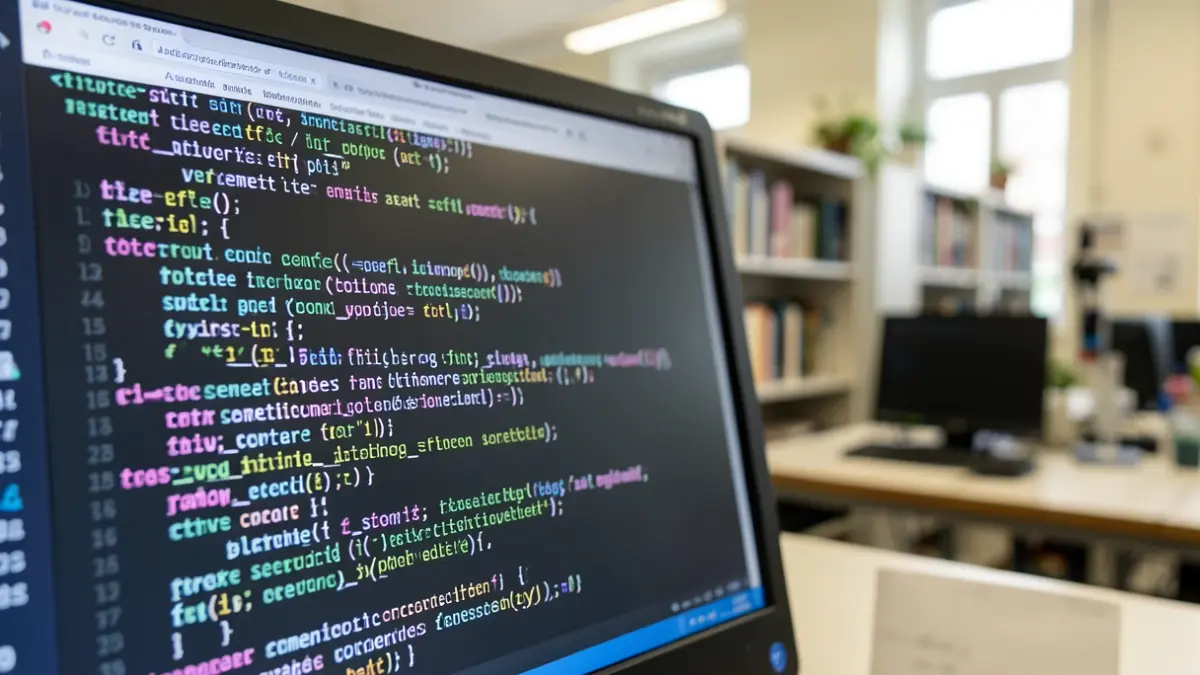
This assistant, which can be used on classroom computers without an internet connection, facilitates the transition from languages like Python, Java, or C++ to code closer to what the processor executes. The technical work of the system has been published in the journal Computer Applications in Engineering Education.
Professor Federico García Crespi from UMH, creator of the tool, explains that assembly language avoids working directly with the binary sequences of machine code, using short names for operations but requiring great precision in each instruction. "It's an important change in the way of thinking," says Crespi, "the problem is translating the idea into the specific instructions that the architecture understands."
CODE2_AI aims to address cognitive load, meaning the mental overload that occurs when learning complex concepts. Students must solve the problem while simultaneously remembering registers, memory locations, instructions, and strict syntax, which can lead to the so-called 'blank page syndrome'.
Currently, reducing this cognitive load is a pedagogical hypothesis awaiting verification. The published study evaluates CODE2_AI's technical performance, showing good results in instruction accuracy and response time reduction, but it cannot yet be stated that it improves student learning.
The system uses a T5-Small model trained with 50,000 examples and optimized to run on conventional CPU-based computers, without needing a specialized graphics card or cloud connection. This allows student data to remain within the university's infrastructure.
García Crespi emphasizes the importance of learning to critically evaluate what a machine generates. "The tool is not designed for students to automatically copy the result," he stresses, "the student must check, execute, and justify what they obtain."
Next steps include studying the system's pedagogical effect and comparing the learning of students who use the assistant with those who do not. "We are preparing an evaluation with prediction, execution, and verification activities," Crespi anticipates.
CODE2_AI can be tested via a web demonstration, and its code is openly available on GitHub.